Complete guide to disposable paper cups: sizes, materials, eco-friendly options, custom printing, and how to choose the right cup for your business.
Disposable Paper Cups: The Complete Buyer's Guide for 2026
Whether you run a coffee shop, a catering business, or an office pantry, disposable paper cups are one of those purchases you make every single week — and the wrong choice costs you money, customer complaints, or both. This guide breaks down everything you need to know: cup sizes, materials, eco-friendly certifications, custom printing, and how to pick a supplier you can trust.
Why Paper Cups Still Dominate Food Service
Despite the rise of reusable programs, disposable paper cups remain the default choice for cafés, fast-food chains, events, and offices. The reasons are simple:
Hygiene — single-use eliminates cross-contamination concerns
Convenience — no washing, no deposits, no return logistics
Cost control — per-unit pricing scales down sharply at volume
Branding — the cup itself is a walking advertisement
For most food service businesses, the real question isn't whether to use paper cups — it's which paper cups to buy.
Understanding Paper Cup Sizes
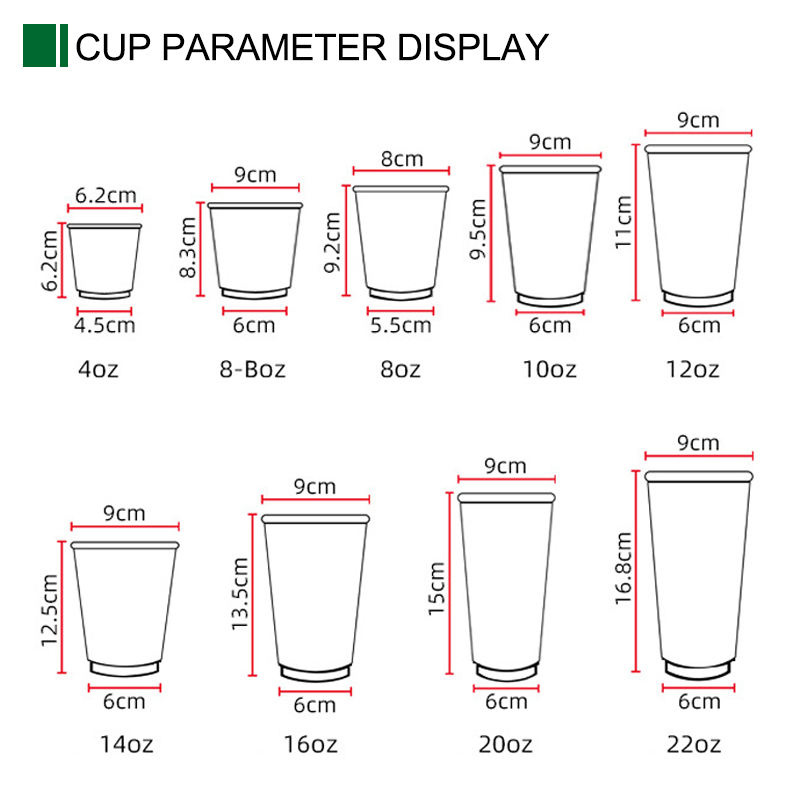
Choosing the wrong size is the most common (and most expensive) mistake buyers make. Here's the standard range and what each size is typically used for:
Size (oz) | Size (ml) | Common Use |
4 oz | 120 ml | Espresso shots, tasting samples, sauce portions |
8 oz | 240 ml | Small coffees, tea, kids' drinks |
12 oz | 360 ml | Standard coffee size in most cafés |
16 oz | 480 ml | Large coffee, iced drinks, smoothies |
20 oz | 600 ml | Extra-large cold drinks, specialty beverages |
Pro tip: If you serve both hot and cold drinks, remember that cold cups need different lid fittings than hot cups. Mixing them up is a frequent source of customer complaints — and lid returns.
Paper Cup Materials: What's Actually Inside
Not all paper cups are created equal. The lining — not the paper — determines performance, recyclability, and price.
1. PE-Lined Cups (Traditional)
The classic single-use paper cup uses a thin polyethylene (PE) coating to make it waterproof. It's cheap, reliable, and works for both hot and cold drinks. The trade-off: PE lining makes recycling more difficult, which is why many regions are moving away from it.
2. PLA-Lined / Compostable Cups
PLA (polylactic acid) is a plant-based bioplastic lining. Cups with PLA lining are certified compostable under standards like EN 13432 or ASTM D6400 — but only in industrial composting facilities. If your customers care about sustainability (and in many markets, they increasingly do), these are worth the 10–20% price premium.
3. Water-Based Barrier Coating Cups
The newest generation of disposable paper cups uses a water-based dispersion coating with no plastic lining at all. These are the easiest to recycle in standard paper streams and are rapidly becoming the default for eco-focused brands in the EU and North America.
Wall Construction Matters Too
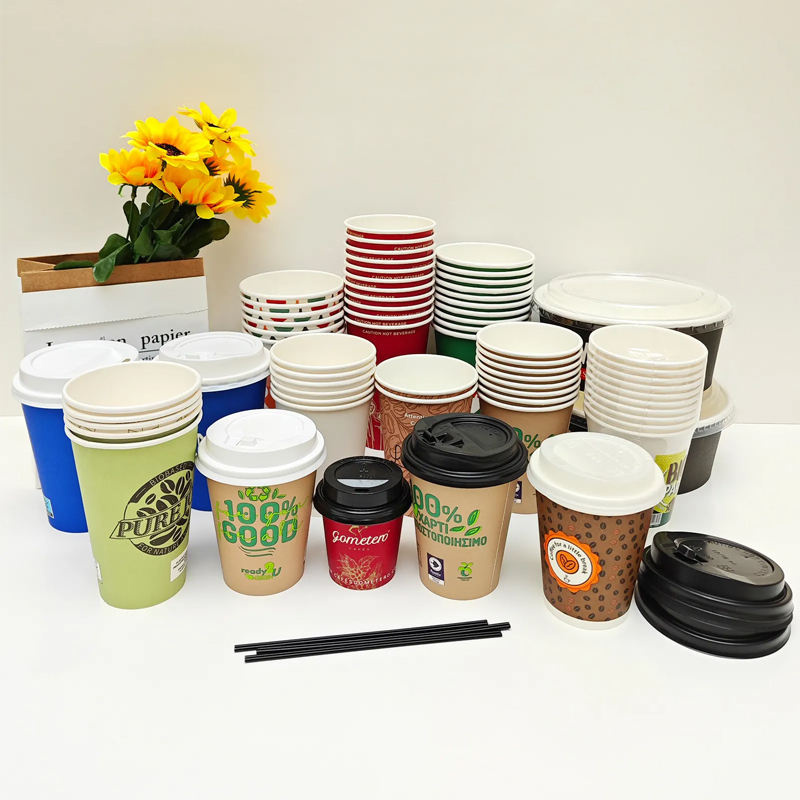
Single wall — cheapest, best for cold drinks or short holds
Double wall — insulating air layer, no sleeve needed for hot drinks
Ripple wall — corrugated outer layer, best grip and heat protection, premium feel
For hot beverages above 12 oz, always choose double wall or ripple wall. A burned customer is a lost customer.
Eco-Friendly Paper Cups: How to Avoid Greenwashing
"Biodegradable" on a product page means very little on its own. When evaluating eco-friendly disposable paper cups, look for these certifications:
FSC® or PEFC — the paper fiber comes from responsibly managed forests
EN 13432 (EU) / ASTM D6400 (US) — industrial compostability
BPI Certified — North American compostability verification
PFAS-free declaration — increasingly required, as "forever chemicals" have been found in some molded fiber products
One honest note for your own marketing: compostable cups only compost in industrial facilities. If your city doesn't have one, a water-based coated recyclable cup may actually be the greener real-world choice — and being able to explain that nuance builds trust with eco-conscious customers.
Custom Printed Paper Cups: Worth It?
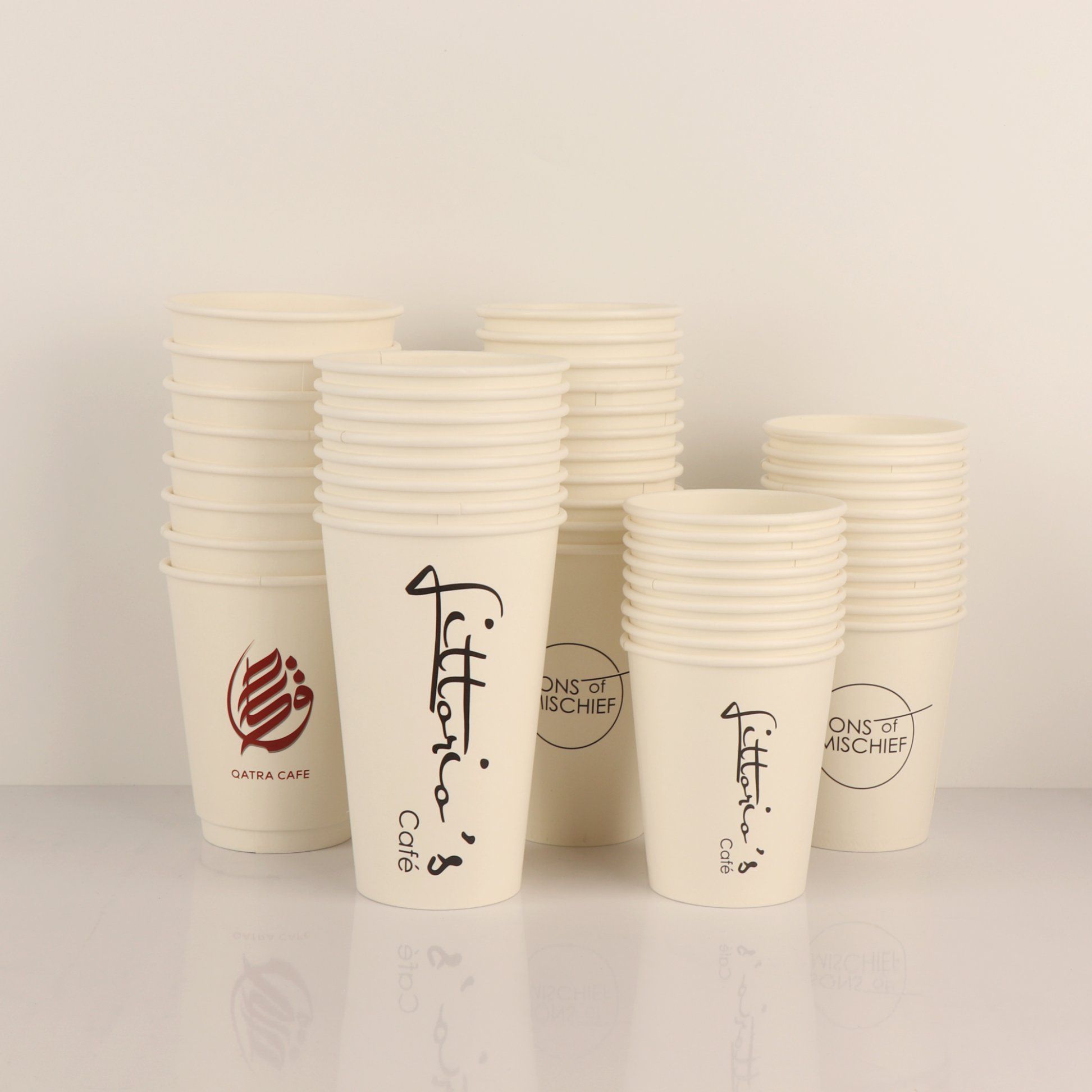
For most cafés and QSR brands, custom printed paper cups are one of the highest-ROI branding investments available. A cup is held for 15–30 minutes and seen by everyone around it.
Key things to know before ordering:
Minimum order quantity (MOQ) — typically 10,000–50,000 units for custom printing; some suppliers offer lower MOQs with digital printing
Printing methods — flexographic (cheap at volume, limited colors) vs. offset (photo-quality) vs. digital (low MOQ, ideal for testing designs)
Food-safe inks — always confirm soy-based or water-based food-grade inks
Lead time — budget 4–6 weeks for custom production plus shipping
A practical starting strategy: order one custom design for your best-selling drink size only, and use stock cups for the rest. You get 80% of the branding effect at 30% of the cost.
How to Choose a Reliable Paper Cup Supplier
Whether you're buying wholesale paper cups locally or importing directly from manufacturers, use this checklist:
Consistent quality samples — request samples of the exact size and wall type before ordering
Food-contact certifications — FDA (US), LFGB (EU/Germany), or equivalent for your market
Transparent material specs — GSM of the paper, lining type, and lid material in writing
Stable lead times — ask for references or recent shipment records
Lid compatibility guarantee — lids and cups should be tested together, not assumed
Importing from manufacturers (commonly in China, Vietnam, or India) can cut unit costs by 30–50% at container volumes, but requires managing quality inspection and shipping. For smaller operations, a regional distributor with lower MOQs is usually the smarter start.
Frequently Asked Questions
Are disposable paper cups recyclable?
Traditional PE-lined cups are technically recyclable but only at facilities with specialized equipment, so most end up in landfill. Water-based coated cups recycle in standard paper streams, and PLA-lined cups compost in industrial facilities. Check your local waste infrastructure before labeling any cup "recyclable."
How long can a paper cup hold hot coffee?
A double-wall or ripple-wall paper cup holds drinks above 80°C comfortably for 30+ minutes. Single-wall cups become too hot to hold almost immediately without a sleeve.
What is the most popular paper cup size for coffee shops?
12 oz is the global best-seller for hot coffee, with 16 oz leading for iced drinks. Most cafés stock three sizes: 8 oz, 12 oz, and 16 oz.
Do compostable paper cups break down in a landfill?
No. Compostable cups need the heat and microbial activity of an industrial composting facility. In an oxygen-poor landfill, they decompose no faster than conventional cups.
How many disposable paper cups does a coffee shop use per month?
A mid-sized café serving 150–300 drinks daily typically uses 6,000–15,000 cups per month, which is why even a $0.01 per-cup price difference adds up to $1,000+ per year.
Final Takeaway
Choosing disposable paper cups comes down to four decisions: the right size for your menu, the right lining for your local waste infrastructure, the right wall construction for your drink temperatures, and a supplier who can prove their certifications. Get those four right and your cups stop being a cost center — and start being part of your brand.