Discover the secrets of McDonald's large cup, holding 30 oz. Explore its design, impact on fast food trends, and global variations.
How Many Ounces is in a Large Mcdonalds Drink Cup: Compare Size 30 oz
In the realm of fast food, few things spark as much curiosity—and perhaps debate—as the size of a beverage. When you swing by McDonald’s and order a large drink, have you ever wondered just how many ounces that cup holds? More importantly, what does the size mean in the context of evolving consumer habits, pricing, and even sustainability? Let’s take a closer look at the world of fast-food receptacles, with a special focus on the McDonald’s large cup and the significance of a 30-ounce benchmark.
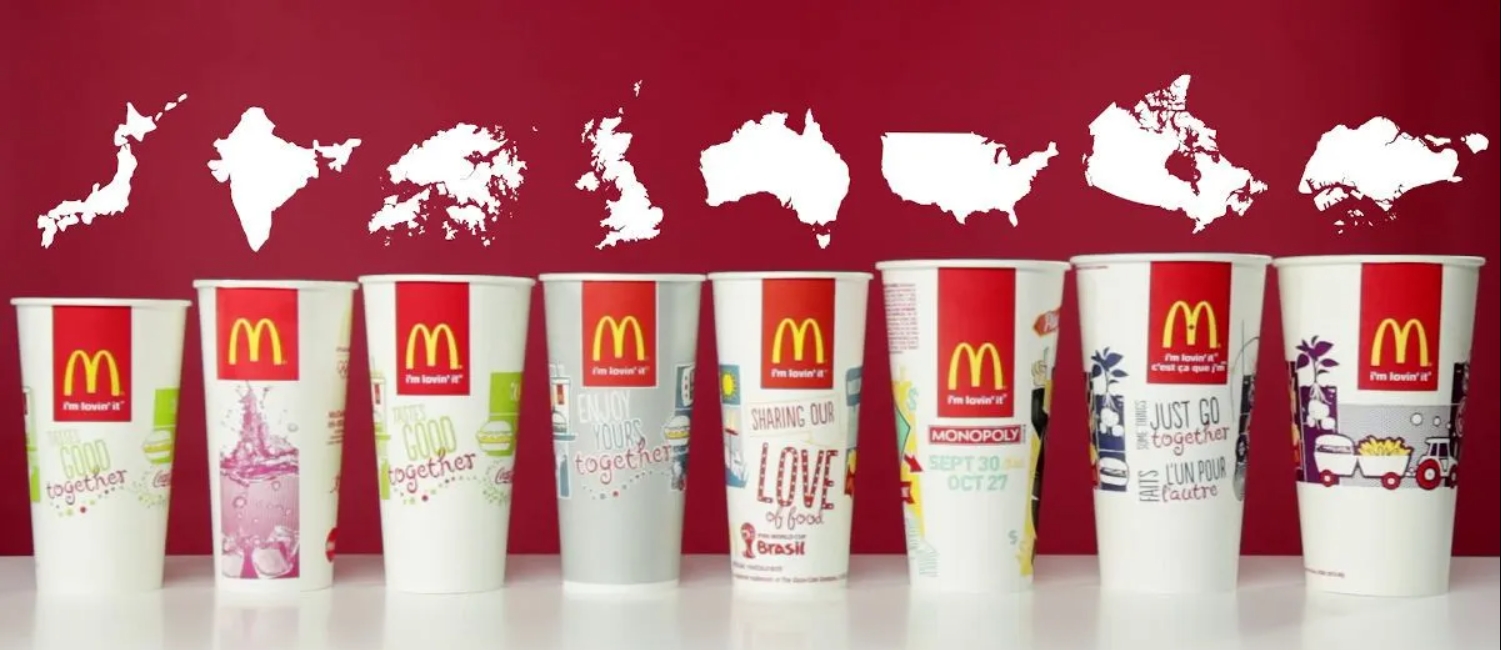
The Metamorphosis of Fast Food Receptacles: A Liquid Chronicle
Consumer tastes and societal shifts have driven major changes in the fast-food industry over the decades. Back in the 1950s, when Ray Kroc opened his first McDonald’s franchise, fountain drinks were typically served in modest 7-ounce cups. As the years ticked by, a growing appetite for value—and supersized convenience—brought about larger and larger portions.
Fast forward to the present day, and the “large” cup at McDonald’s can easily dwarf the original sizes by more than four times. This evolution is not unique to McDonald’s. Competitors like Burger King, Wendy’s, and Taco Bell have also expanded their “large” drink offerings to keep up in the race for customer satisfaction and perceived value.
This growth isn’t just about quenching bigger thirsts. The phenomenon reflects broader Western cultural themes: more is better, convenience reigns supreme, and the cup you hold is a marker of the era’s lifestyle. Notably, cup sizes may still vary by region or country depending on dietary norms and local regulations, but in the United States—the birthplace of “supersize”—bigger is the default standard.
The Anatomy of a McDonald’s Large Cup
So, how big is a McDonald’s large cup, really? In the United States, the standard McDonald’s large drink cup holds **30 ounces** (oz) of liquid, which translates to about 887 milliliters (ml). This size has become the industry standard over the past decade, meeting the expectations of thirsty patrons seeking maximum value.
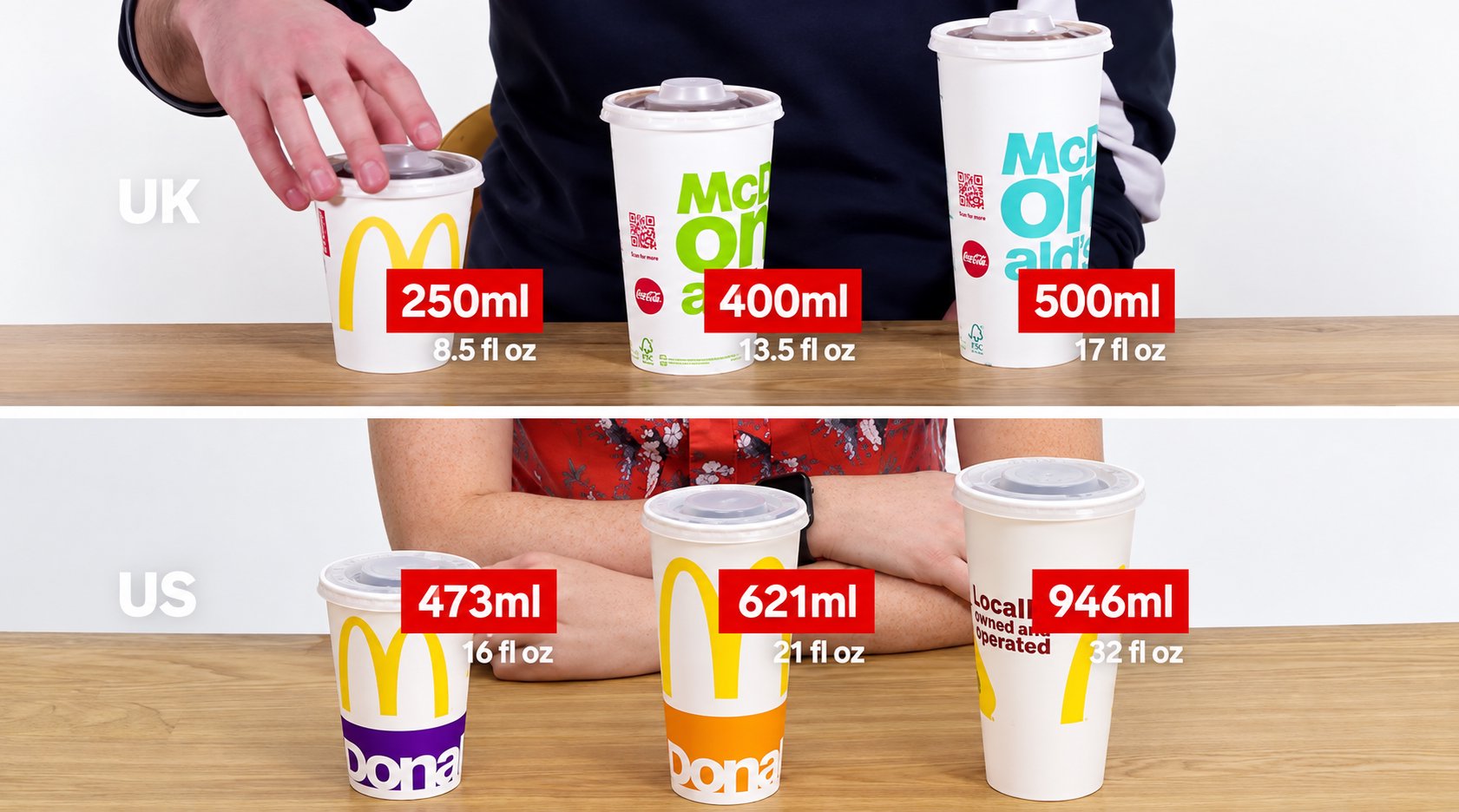
Let’s break down the typical McDonald’s cup sizes for cold beverages in the U.S. for clarity:
Small: 16 oz (approximately 473 ml)
Medium: 21 oz (approximately 621 ml)
Large: 30 oz (approximately 887 ml)
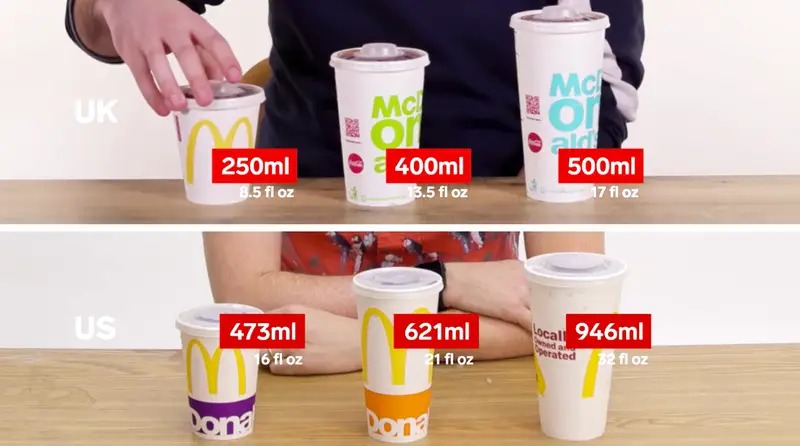
But it doesn’t stop there. Certain McDonald’s locations—especially those along highways and in select states—have even piloted “Extra Large” options, going up to 32 or 40 oz for special promotions or regional preferences. However, 30 oz remains the default for most large beverages.
What about other beverages, like coffee? McDonald’s hot drink cups (for coffee, tea, etc.) use a different sizing chart:
Small: 12 oz
Medium: 16 oz
Large: 21 oz
The confusion sometimes arises when customers compare iced drink sizes with hot cup sizes, so it’s important to note which menu item you’re ordering.
Why 30 Ounces?
The jump to 30 ounces wasn’t arbitrary. Through market research, McDonald’s found that this size strikes the ideal balance between satisfying customer cravings, featuring competitively on “value menus,” and not overwhelming hold-in-hand comfort or cup holder capacity in cars. The transition also mirrors trends in the wider fast-food industry, solidifying 30 oz as the “sweet spot” for a true large beverage.
The 30-oz Benchmark: A Study in Conformity and Rebellion
With a 30-ounce large cup, McDonald’s created a North American standard that many quick-service restaurants have mirrored—or challenged—in different ways. Let’s compare McDonald’s to other major players:
Burger King: Typically offers a 32 oz large cup.
Wendy’s: The large drink size varies, usually around 32 oz.
Taco Bell: Large drinks are also around 30 oz.
Some chains, however, have chosen to rebel by offering even bigger (the infamous 44 oz drinks at certain gas station chains and convenience stores), or capping their “large” sizes at more modest amounts in response to health regulations or public pressure.
But why does this standardization matter? For the consumer, it removes guesswork. When you ask for a “large” at McDonald’s, you can almost always expect a 30-ounce drink. For the industry, it fuels pricing wars, marketing campaigns, and even legislative conversations around portion control and public health.
Interestingly, the debate around large cup sizes isn’t limited to customer satisfaction. New York City notoriously tried to ban the sale of sugary drinks larger than 16 oz in 2012, a move that sparked nationwide debate. While the legislation was struck down in court, the discussion paved the way for ongoing scrutiny of drink sizes, sugar content, and consumer responsibility.
The Ripple Effect: When Ounces Dictate Dollars
The size of a McDonald’s large cup isn’t just a matter of thirst—it’s big business. Larger drink sizes have a direct impact on fast food marketing strategies, business viability, and consumer psychology.
Perceived Value
The psychological principle known as “value stacking” is at play here. When the price gap between a medium and large drink is marginal—say, 50 cents more for nearly 50% extra liquid—consumers are incentivized to “go large.” This value proposition keeps drive-thrus moving and profits high, as the difference in cost for McDonald’s to fill a larger cup amounts to only pennies due to the low price of fountain drinks.
Meal Bundling
Combo meals and “Value Meals” are built around these drink sizes. The 30 oz portion pairs with large fries, reinforcing the idea that you’re getting more bang for your buck. This marketing angle is so enmeshed in fast food culture that most people instinctively expect a sizable soft drink alongside their burger and fries.
Upsizing Revenue
Despite offering larger portions, beverage upsizing is a low-cost, high-margin tactic for any fast food chain. The cost of sugary soda syrup and carbonated water is minute compared to other menu items, meaning a shift to 30-ounce cups enhances profitability while offering the customer the perception of value.
The Green Dilemma: When Size Matters for the Planet
While large cup sizes are unquestionably convenient, they present a real sustainability challenge: more plastic, more straws, more waste. McDonald’s, as the world’s largest fast-food chain, faces growing scrutiny over the environmental impact of single-use cups.
Material Evolution
McDonald’s has shifted between polystyrene, paper, and various plastics over the years to reduce costs and answer environmental advocates’ calls. Today, most U.S. locations use recyclable plastic or coated paper cups for large drinks, but the recycling infrastructure lags behind the needs of high-volume chains. Many cups ultimately still end up in landfill.
Global Responsibility
The topic gets even stickier in countries with strict waste reduction mandates. In the UK, for instance, McDonald’s large cold cups are typically paper-based and somewhat smaller, reflecting both local tastes and eco laws. The chain also pilots reusable cup programs and straw bans in various international markets as part of its public commitment to reduce its carbon footprint.
Consumer Choices
Customers are increasingly factoring environmental impact into their purchase decisions. As this trend accelerates, it’s possible we’ll see beverage cup sizes gradually shrink in certain markets, or see new materials replace plastic entirely. In the meantime, the classic 30-oz cup remains a symbol of both American fast-food culture and its sustainability challenges.
FAQ
Q: How many ounces are in a McDonald’s large cup in the U.S.?
A: The standard McDonald’s large cup in the U.S. holds 30 ounces (about 887 ml) for cold beverages.
Q: Does cup size vary by country?
A: Yes, McDonald’s cup sizes vary internationally based on local laws, customer preference, and sustainability efforts. For example, UK large cups are generally smaller than those in the U.S.
Q: Why are soft drink sizes so large in the U.S.?
A: Consumer demand for value, marketing strategies, and cultural preferences for larger portions have all contributed to the trend of increasing cup sizes.
Q: Are McDonald’s cups recyclable?
A: Most U.S. McDonald’s cups are technically recyclable, but they often require specialized facilities. Many end up as landfill waste.
Q: Will McDonald’s reduce cup sizes for environmental reasons?
A: McDonald’s is testing various sustainability measures worldwide, but the 30-oz large cup remains standard in the U.S. for now.
Conclusion
The McDonald’s large cup, with its 30-ounce capacity, is more than just a vessel for soda—it’s a reflection of decades of innovation, consumer behavior, and evolving cultural attitudes toward food, value, and sustainability. Whether you’re watching your portion sizes or just looking to quench a serious thirst, understanding what goes into that iconic cup can help you make more informed decisions the next time you visit the Golden Arches.