Complete guide to disposable plastic cups: PP vs PET vs PLA, hot vs cold use, dome lids, recyclability rules, and how to choose the right cup.
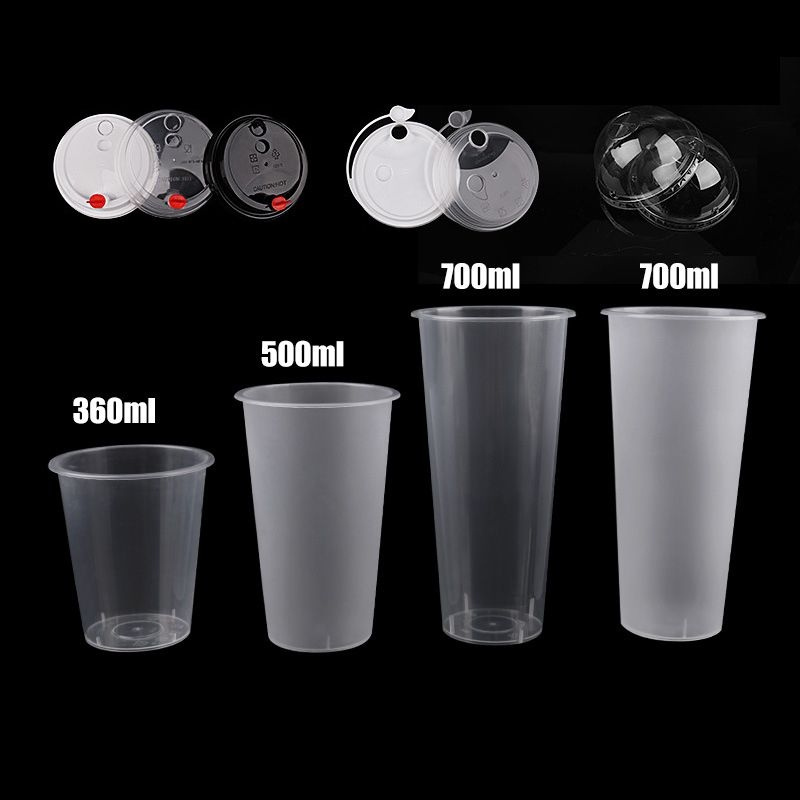
Disposable Plastic Cups: The Complete Buyer's Guide for 2026
Plastic cups didn't disappear with the plastic bans — they specialized. Walk into any bubble tea shop, smoothie bar, or stadium concession stand and you'll see more clear plastic cups than ever, because for cold drinks with toppings, nothing else does the job. The problem is that plastic cup terminology is a minefield: PET, PP, rPET, PLA all look identical and behave completely differently. Order the wrong resin and you get warped cups, cracked lids, or a shipment your market legally won't accept. This guide sorts it out.
The One Rule That Prevents Most Mistakes
Match the resin to the drink temperature — before anything else.
Resin | Hot Drinks | Cold Drinks | Notes |
PET | ❌ No | ✅ Yes | Crystal clear, most common for iced drinks; deforms around 60°C |
rPET | ❌ No | ✅ Yes | Recycled PET, same performance, strongest eco story in cold cups |
PP | ✅ Yes | ✅ Yes | Heat-tolerant to ~100°C, slightly hazy, microwave-safe |
PS | Limited | ✅ Yes | Rigid and glossy but brittle; banned or restricted in many markets |
PLA | ❌ No | ✅ Yes | Plant-based, compostable industrially, NOT heat-tolerant |
Ninety percent of plastic cup complaints trace back to one error: PET cups used for hot drinks. PET starts softening near 60°C — a cup of hot tea will warp it into a funnel within seconds. If your menu includes anything hot, that line needs PP, full stop.
Understanding the Resins
PET: The Clear Cup Standard
PET (recycling code #1) is the most widely used plastic for cold cups, and for good reasons:
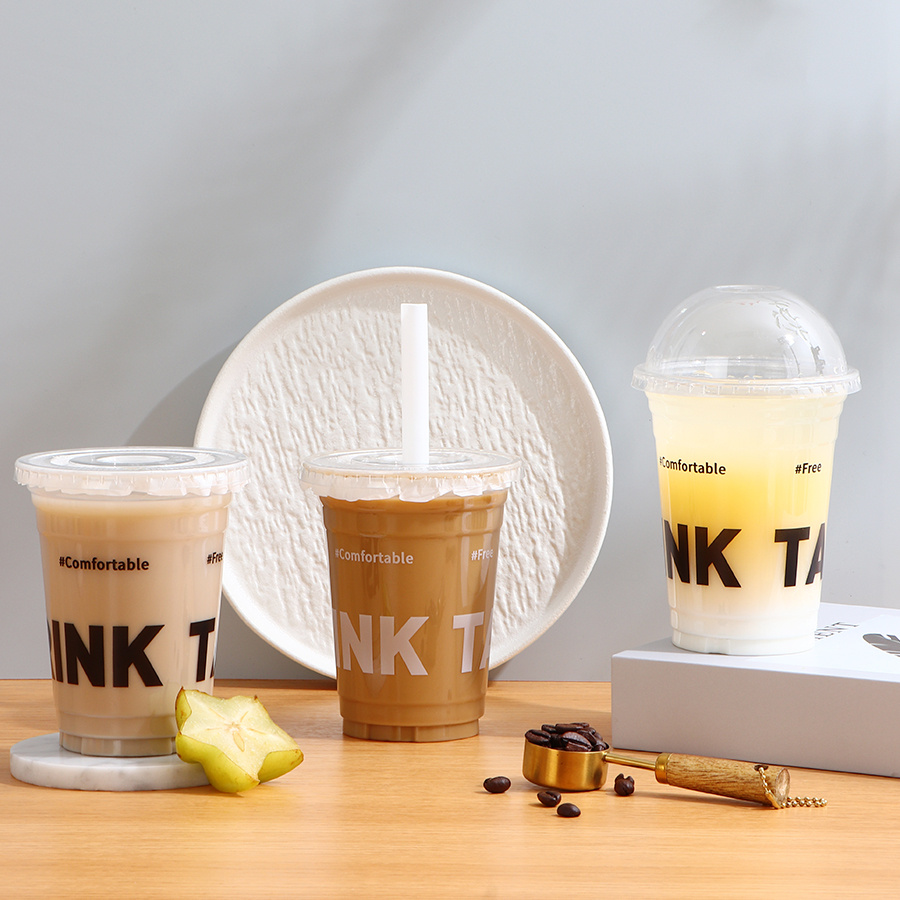
Glass-clear transparency — the cup becomes a display case for layered drinks, fruit teas, and boba
Excellent print surface — accepts high-quality direct printing and full wraps
Widely recyclable — #1 is the most valuable, most collected plastic stream in the world
Cost-efficient at volume
Its one hard limitation is heat. PET is a cold-drink material, and no spec sheet changes that.
rPET: PET With a Recycled Backbone
rPET cups are made from post-consumer PET bottles, typically 50–100% recycled content. Performance is identical to virgin PET, but the sustainability story is dramatically better — and in the EU, mandated recycled-content quotas for food-contact packaging are making rPET less of a differentiator and more of a requirement. Two things to verify with suppliers:
Food-contact grade rPET — recycled resin must come from an EFSA- or FDA-approved super-clean recycling process; ask for the process certification, not just the percentage
Actual recycled content in writing — "contains recycled material" can mean 10%
PP: The Heat-Tolerant All-Rounder
PP (recycling code #5) handles boiling-adjacent temperatures, which makes it the default for hot drink cups, soup cups, and anything microwave-reheated. It's slightly hazy rather than glass-clear, and marginally more expensive than PET. For bubble tea shops serving hot winter drinks alongside iced summer ones, the standard setup is: PP cups for the hot line, PET for the cold line.
PLA: Compostable but Fragile to Heat
PLA cups look and feel like PET but are made from plant starch. They're industrially compostable (EN 13432 / ASTM D6400) — and they deform with hot liquids exactly like PET does. They also need industrial composting to break down at all. Choose PLA only when compostability is a genuine requirement for your market or brand positioning, not as a default "green" upgrade.
Sizes and Lid Logic
Plastic cups for cold drinks follow the same size ladder as paper, with one important difference: top diameter is the spec that matters most, because it determines which lids and sealing machines work.
Size (oz) | Size (ml) | Common Use |
9 oz | 270 ml | Small iced coffees, slush samples |
12 oz | 360 ml | Small bubble tea, iced coffee |
16 oz | 480 ml | Standard cold drink size |
22 oz | 650 ml | Large smoothies, iced tea |
24–32 oz | 700–950 ml | Extra-large formats, stadium drinks |
Three lid rules that save money:
Standardize top diameters — most plastic cups come in 90mm or 95mm tops; keeping your whole cup range on one diameter means one lid SKU serves all sizes
Dome lids add perceived value — a dome lid with room for whipped cream and toppings costs slightly more and measurably lifts upsell rates on specialty drinks
If you use a sealing machine (film), verify cup rim tolerance — film sealers are precision instruments; rim diameter variance of even 0.5mm causes seal failures. Buy cups and film from tested-compatible sources
Recyclability: What You Can Legally and Honestly Claim
Plastic cup sustainability claims are under more legal scrutiny than any other packaging category. The safe ground:
PET (#1) and PP (#5) are recyclable in most municipal streams — this is the most defensible claim
rPET with verified recycled content supports "made with recycled plastic" claims — with the percentage stated
"Biodegradable" claims for PLA are legally restricted in many jurisdictions (including under EU and several US state laws); use "industrially compostable" with certification marks instead
Colored and frosted cups are worth less in recycling streams than clear cups — clear PET commands the highest bale value
Also know your market's regulations: several US states, the EU's single-use plastics framework, and various national rules restrict PS (polystyrene) and certain plastics outright. Before importing, confirm the resins in your order are compliant where you sell — customs seizures of non-compliant food-contact plastics do happen.
Custom Printed Plastic Cups
Clear plastic cups are the best print canvas in food service — a printed logo on a glass-clear cup sits against a colorful drink, which is why bubble tea and smoothie brands treat the cup as their primary ad.
Key facts:
Printing methods — dry offset (most common for cups, 1–4 colors), digital (low MOQ, ideal for campaigns), and shrink sleeves (full 360° design, higher cost)
MOQ — typically 20,000–50,000 for printed runs; digital lowers this to a few thousand
Ink side matters — printing is usually applied outside the cup; for direct food contact inks, require food-grade certification in writing
Design tip for clear cups — a one-color logo printed low on the cup stays visible above the drink line; full wraps hide the product you're selling
A practical starter: print one color on your best-selling size in PET, keep other sizes stock. Full-wrap sleeves and multi-color runs come after the design proves itself on social media.
How to Vet a Plastic Cup Supplier
Resin identification in writing — resin type, recycled content percentage, and food-contact grade per SKU
Heat test PET samples — pour 70°C water in; if it deforms, it's out of spec or mislabeled
Seal-machine compatibility proof — if you use film sealers, get cups tested with your machine model
Certificates verifiable — FDA / LFGB food-contact documents; EFSA-approved process certification for rPET
Rim tolerance spec — critical for both lids and sealing film
Clarity inspection — reject shipments with visible haze, flow lines, or off-cuts; clarity is a quality proxy for the whole run
Importing from manufacturers in China, Vietnam, or Malaysia cuts costs 30–50% at container volumes. Plastic cups are lighter than paper equivalents (more units per container), which makes the logistics math even better — but food-contact resin documentation is stricter, so demand full paperwork before the container ships, not after.
Frequently Asked Questions
Can PET plastic cups hold hot drinks?
No. PET softens around 60°C and will warp with hot liquids. Use PP cups for anything hot — PP tolerates temperatures up to about 100°C and is microwave-safe.
What are disposable plastic cups made of?
Most commonly PET for clear cold cups, PP for hot-drink cups, and increasingly rPET (recycled PET). PS is being phased out in many markets. PLA appears where industrial compostability is required.
Are plastic cups recyclable?
PET (#1) and PP (#5) cups are recyclable in most municipal streams — clear PET is the most valuable. Cups heavily contaminated with drink residue should be rinsed first. PLA cups are not recyclable; they require industrial composting.
What is the difference between PET and rPET cups?
Performance is essentially identical. rPET is made from recycled PET (typically 50–100% post-consumer content) and carries a lower carbon footprint, but must be produced in certified food-contact recycling processes to be legally used for drinks.
Which plastic cup is best for bubble tea?
A 16 oz (480 ml) PET cup with a 90mm or 95mm top, paired with either a sealed film or a dome lid large enough for toppings. Sealed film is the industry standard for delivery because it survives transit far better than snap-on lids.
Final Takeaway
Choosing disposable plastic cups comes down to four decisions: the right resin for your drink temperatures (PET/rPET for cold, PP for hot), a standardized top diameter so one lid SKU covers your range, recyclability claims your market's laws actually allow, and a supplier who documents resin grade and rim tolerance in writing. Get those four right and your cups do what the best packaging does: disappear into the drink — and put your logo on it.