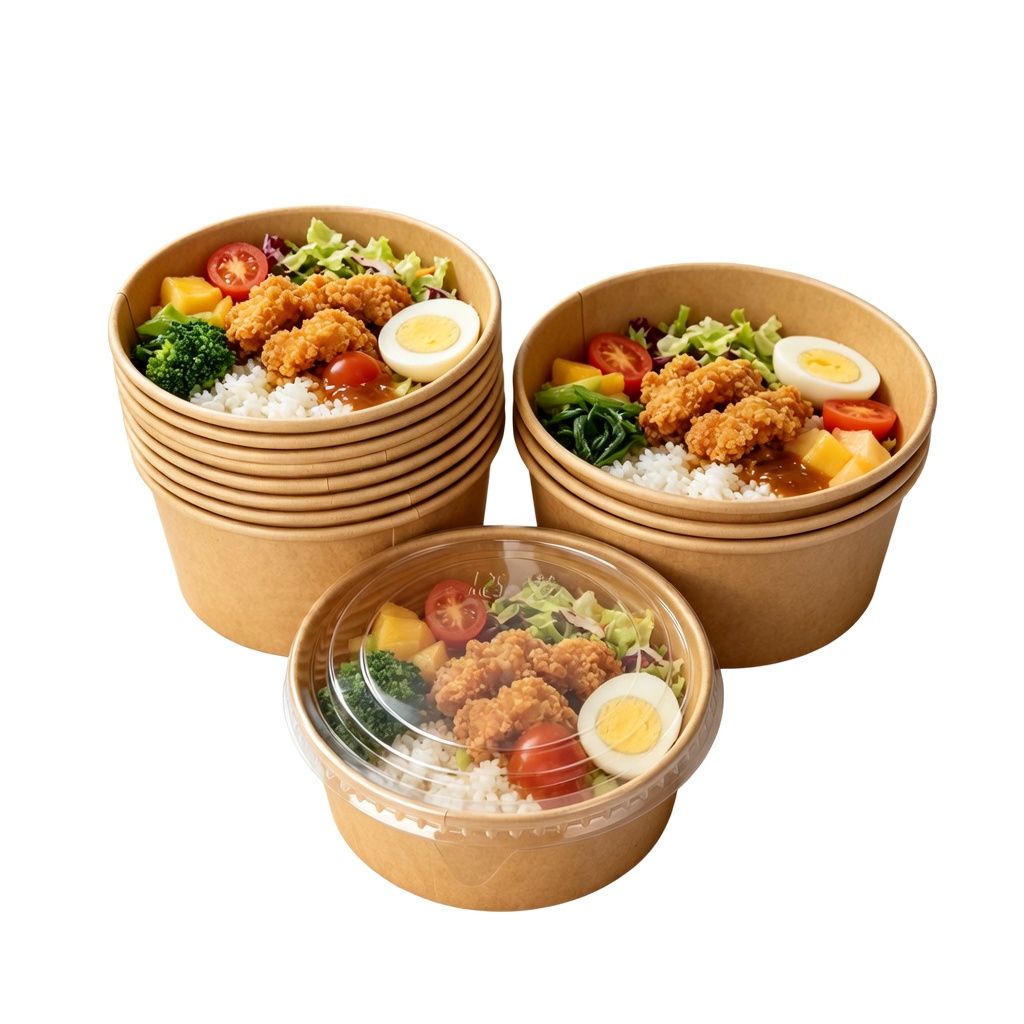
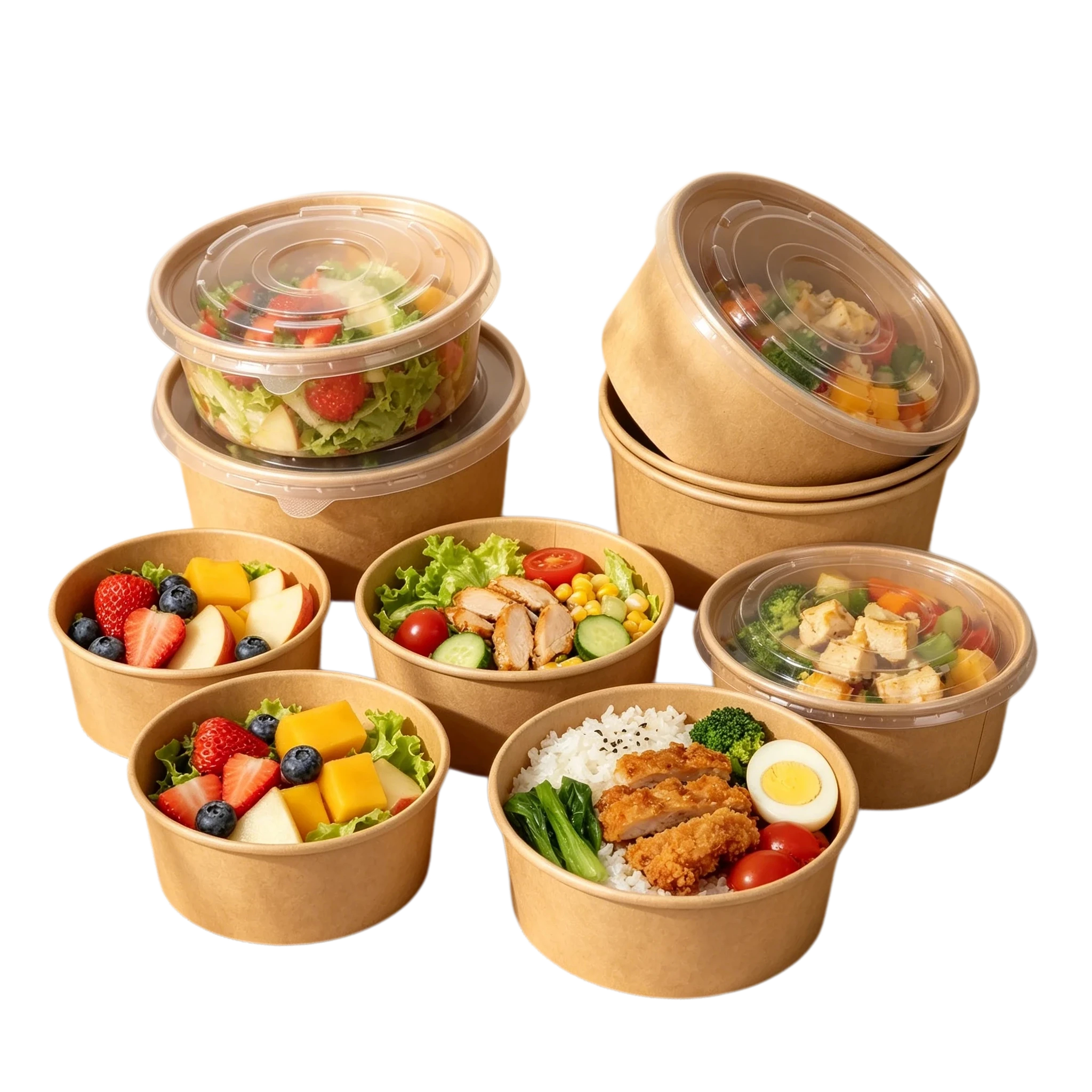
Complete guide to disposable paper bowls: sizes, materials, leak-proof design, eco-friendly options, and how to choose the right bowl for your business.
Disposable Paper Bowls: The Complete Buyer's Guide for 2026
If you run a restaurant, meal-prep service, food truck, or catering company, disposable paper bowls are probably one of your biggest recurring packaging costs — and one of the most underestimated. The wrong bowl means leaks, soggy walls, unhappy customers, and bad reviews. This guide covers everything you need to choose the right bowl: sizes, materials, lids, eco-certifications, and supplier checks.
Why Paper Bowls Are Replacing Plastic
Across the US, EU, and many other markets, single-use plastic bowls are being restricted or banned outright. Paper bowls have stepped in as the default alternative because they:
Meet plastic bans — compliant in most jurisdictions that restrict EPS and single-use plastic
Handle hot and oily food — when properly lined, they hold soup, curry, and sauced dishes
Microwave safely — most paper bowls are microwave-reheatable, a real advantage for takeout customers
Print beautifully — the wide surface area makes them ideal for branded packaging
For food delivery businesses in particular, the bowl is the customer experience: it arrives at the door carrying your brand.
Disposable Paper Bowl Sizes: What Each One Is For
Bowls are measured in ounces (fluid capacity), and picking the right size is where most buying mistakes happen. Here's the standard range:
Size (oz) | Size (ml) | Common Use |
8 oz | 240 ml | Side dishes, dips, small salads, desserts |
12 oz | 360 ml | Small noodle servings, kids' meals, ice cream |
16 oz | 480 ml | Standard takeout salad or pasta portion |
24 oz | 720 ml | Large noodle bowls, poke, hearty soups |
32 oz | 950 ml | Family-size servings, meal-prep bowls, açaí |
Pro tip: Match the bowl to your largest realistic portion, not your average one. A 16 oz bowl filled with a 20 oz portion is the single most common source of lid failures and leaks.
Materials: What Keeps a Paper Bowl From Leaking
The paper itself is never what holds the soup — the lining is. Three lining types dominate the market:
1. PE-Lined Bowls (Traditional)
A polyethylene coating makes the bowl waterproof and grease-proof. This is the cheapest and most widely available option, and it handles hot, oily food reliably. The downside is recyclability: PE lining complicates paper-stream recycling, which matters in markets with strict packaging rules.
2. PLA-Lined / Compostable Bowls
PLA (plant-based bioplastic) lining gives the same leak protection with certified compostability under EN 13432 or ASTM D6400. These are the go-to choice for brands marketing themselves as sustainable. Note: they compost in industrial facilities, not in a home compost bin or landfill.
3. Water-Based Barrier Coating Bowls
The newest option uses a plastic-free dispersion coating. These bowls recycle in standard paper streams and are becoming the preferred choice in the EU, where plastic-lined packaging faces increasing scrutiny. Expect a modest price premium, shrinking as production scales.
Double-Wall and Vented Designs
For very hot dishes (ramen, pho, congee), a double-wall paper bowl keeps the outside comfortable to hold. Some soup bowls also come with vented lids to release steam — worth requesting if your menu is mostly hot liquids, because trapped steam softens lids and causes spills during delivery.
Lids Are Half the Product
A paper bowl is only as good as its lid. Before ordering, confirm:
Material match — PP lids handle heat well; PET lids are crystal-clear for cold salads but deform near heat; bagasse (sugarcane) lids are the fully compostable route
Seal performance — ask the supplier for leak-test results at 90°C, not just room temperature
Stackability — delivery riders stack orders; bowls that nest securely survive transit
Same-supplier guarantee — buy bowls and lids from the same source so fit is guaranteed, not assumed
Eco-Friendly Paper Bowls: Certifications That Actually Matter
"B eco-friendly" is marketing language; certifications are proof. When evaluating suppliers, look for:
FSC® or PEFC — responsibly sourced paper fiber
EN 13432 (EU) / ASTM D6400 (US) — industrial compostability
BPI Certified — the North American compostability standard buyers recognize
PFAS-free declaration — critical, since grease-resistant treatments have historically been a hidden source of "forever chemicals"
FDA / LFGB food-contact compliance — mandatory for food service in the US and EU respectively
Being able to show these certifications on your own packaging claims also protects your brand from greenwashing accusations.
Custom Printed Paper Bowls: Branding That Rides in a Delivery Bag
For delivery-heavy businesses, a custom printed paper bowl turns every order into a mobile billboard. Key facts before ordering:
MOQ — typically 20,000–50,000 units for flexographic printing; digital printing lowers this to a few thousand for testing designs
Print area — bowls offer more printable surface than cups; use the outside wall and lid for logo and social handle
Food-safe inks — confirm water-based or soy-based food-grade inks in writing
Lead time — 4–6 weeks for custom production plus shipping; plan reorder points accordingly
A smart first step: print your best-selling dish's bowl only, keep the rest stock. Branded packaging on your hero product captures most of the effect at a fraction of the cost.
How to Choose a Reliable Paper Bowl Supplier
Use this checklist whether buying domestically or importing directly from manufacturers:
Real leak tests — request samples filled with actual hot, oily soup for 60 minutes, not just water
Written material specs — paper GSM, lining type, and lid material documented
Certification copies — verifiable certificate numbers, not just logos
Consistent wall weight — thin-wall bowls collapse when gripped with wet hands; test in-store
Container-load pricing transparency — if importing, confirm what's included (inspection, freight, customs paperwork)
Importing from manufacturers in China, Vietnam, or India typically cuts unit costs 30–50% at container volumes. Smaller operations usually do better starting with a regional distributor at lower MOQs, then moving to direct import once volume justifies it.
Frequently Asked Questions
Are disposable paper bowls microwave safe?
Most PE-lined and water-based coated paper bowls are microwave-safe for reheating (1–2 minutes). PLA-lined bowls should not go in the microwave, as PLA softens around 60°C. Always confirm with the supplier's spec sheet.
Can paper bowls hold hot soup without leaking?
Yes — a quality PE-lined or water-based coated bowl holds hot soup for hours. The failure points are almost always the lid seal or overfilling, not the bowl wall. Test the complete bowl-plus-lid unit before bulk ordering.
What size paper bowl do I need for salads?
A standard takeout salad fits a 16 oz bowl; heartier grain bowls and poke need 24–32 oz. Remember greens settle, so a bowl that looks full when assembled looks half-empty after 20 minutes of delivery transit.
Are compostable paper bowls really compostable?
Only in industrial composting facilities, which is what EN 13432 and ASTM D6400 certify. They will not break down in a landfill or a backyard compost bin. If your area lacks industrial composting, a recyclable water-based coated bowl is often the better real-world choice.
How much do disposable paper bowls cost?
At wholesale volumes, stock PE-lined bowls typically run 0.04–0.10 per unit depending on size, compostable versions 0.08–0.15, and custom printed bowls 0.10–0.25. A mid-sized restaurant using 500 bowls daily spends roughly 1,000–2,500 per month, which is why size selection and supplier pricing matter.
Final Takeaway
Choosing disposable paper bowls comes down to five decisions: the right size for your largest portion, the right lining for your menu and local waste rules, a lid system tested with the actual bowl, verifiable certifications for your market, and a supplier who passes a real hot-soup leak test. Get those five right, and your bowls become part of the meal — not a complaint generator.