As a novice buyer, how should I determine my purchasing requirements for paper coffee cups?

Buying paper cups for the first time can feel overwhelming. You might worry about leaking lids, burnt hands, or ordering thousands of cups that customers hate. I have seen many new business owners lose money by choosing the wrong specs. I am here to help you avoid those mistakes.
To determine your purchasing requirements for paper coffee cups, you must assess four key areas: menu-based sizing, thermal insulation needs (single vs. double wall), environmental goals (PE vs. PLA lining), and volume-based logistics. Prioritizing standard rim diameters for lid compatibility and calculating the "total cost of serving" ensures financial and operational efficiency.
Understanding the technical details of a simple paper cup will save you time and protect your profit margins. Let’s dive into the specific factors that define the perfect cup for your business.
What factors define the right paper cup size for my coffee shop menu?
I often see new clients guessing which sizes to buy. They end up with 20,000 tiny cups they never use. It is frustrating to see inventory sitting in a warehouse gathering dust. You need a strategy based on what you actually sell.
The right paper cup size is defined by your specific beverage menu, typically requiring a mix of 8oz, 12oz, and 16oz options. You must standardize rim diameters—usually 80mm or 90mm—across different cup volumes. This strategy minimizes inventory complexity by allowing a single lid size to fit multiple cup sizes.
When you start planning your order, do not just look at the volume number (like 12oz). You must look at how the cup is built. The most critical part of the cup is the "Rim Diameter." This is the width of the top circle of the cup.
Why Rim Diameter Matters More Than Volume
Imagine this: you are busy during the morning rush. You grab a lid, but it does not fit the cup in your hand. You try another one. It also does not fit. This is a nightmare. To stop this, you should buy cups that share the same rim diameter.
In the industry, we usually see 80mm rims for smaller cups (8oz) and 90mm rims for larger cups (12oz, 16oz, and 20oz). If you standardize your 12oz and 16oz cups to both have a 90mm rim, you only need to buy one type of lid for both. This cuts your storage needs in half.
The Hidden Risk of "Generic" Lids
Another big issue is the "Snap-Fit." You might think all 90mm lids fit all 90mm cups. This is not true. Manufacturing variances of just 0.5 millimeters can cause a leak. Hot coffee dripping on a customer's shirt is the fastest way to lose a review.
You must prioritize "snap-fit" assurance over how the lid looks. Always test the lid and cup together from the same supplier. Do not buy cups from Factory A and lids from Factory B. At Xinyujie, we test our cups and lids together every day to ensure they lock tight. Also, check the "rolled rim." If the paper rim is rolled loosely, it gets soft and soggy when the customer drinks. A tight, hard roll is a sign of quality.
Here is a quick guide to help you match your menu to standard cup sizes:
| Cup Size | Common Rim Diameter | Best Used For | Lid Compatibility |
|---|---|---|---|
| 4oz - 7oz | 62mm - 70mm | Espresso, Macchiato, Sampling | Specific small lids |
| 8oz | 80mm | Flat White, Small Cappuccino | 80mm Lids |
| 12oz | 90mm | Regular Latte, Americano | Universal 90mm Lids |
| 16oz | 90mm | Large Coffee, Tea, Iced Drinks | Universal 90mm Lids |
How do I decide between single-wall and double-wall cups for my specific needs?
Choosing the wall type is about more than just price. It is about how the cup feels in the hand and how much it really costs to serve a drink. I want you to look beyond the sticker price.
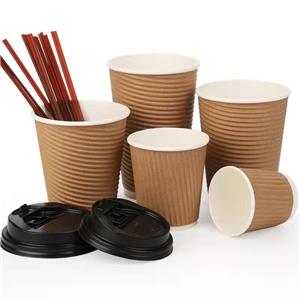
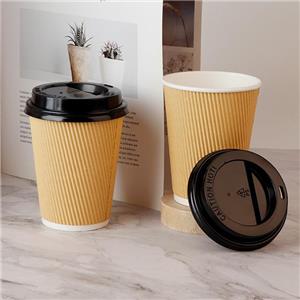
You should decide between single-wall and double-wall cups by calculating the "Total Cost of Serving." Single-wall cups are cheaper but require a cardboard sleeve for hot drinks, often making the total cost higher. Double-wall or ripple-wall cups provide built-in insulation and a sturdier feel, eliminating the need for sleeves and preventing cup collapse.
Many novice buyers make a common mistake. They see the price of a Single Wall cup is low, so they buy it. Then, they realize the cup gets too hot to hold. So, they have to buy a cardboard sleeve (cup jacket). Or worse, customers use two cups ("double-cupping") to avoid burning their hands.
Analyzing the Total Cost of Serving
Let's do the math. If a single wall cup costs $0.03 and a sleeve costs $0.02, your total cost is $0.05. A double-wall cup might cost $0.045. It looks more expensive at first, but it is actually cheaper than the cup-plus-sleeve combination. Plus, you do not have to manage inventory for sleeves.
However, Single Wall cups are perfect for cold drinks or warm drinks that are not boiling hot. If you serve mostly iced latte or warm milk, single wall is a smart choice.
Understanding GSM and "Squeezability"
Have you ever held a cup that felt like it would crush if you squeezed it too hard? That is because of low GSM. GSM stands for "Grams per Square Meter." It measures the weight and thickness of the paper.
A higher GSM means a stronger cup. Cheap cups use low GSM paper. They feel flimsy. When a customer squeezes a flimsy cup full of hot coffee, the lid can pop off. This is dangerous. Double-wall paper cups naturally feel stiffer and more premium because they have two layers of paper. Even if you choose Single Wall, always ask your supplier about the paper weight. Do not sacrifice safety to save a fraction of a penny.
| Feature | Single Wall Cup | Double Wall Cup | Ripple Wall Cup |
|---|---|---|---|
| Insulation | Low (Hot to touch) | High (Air pocket barrier) | Very High (Corrugated layer) |
| Need for Sleeve? | Yes (For hot drinks) | No | No |
| Sturdiness | Medium | High | High |
| Best For | Cold drinks, Warm drinks | Hot Coffee, Tea | Very Hot Soups/Coffee |
Should I prioritize compostable materials for my brand's paper cup sourcing?
Sustainability is a hot topic, but it is also full of confusion. I want to help you make a choice that is honest and practical, not just one that sounds good on marketing materials.
You should prioritize compostable materials if your local area has industrial composting facilities that accept PLA-lined cups. While PLA (Polylactic Acid) is plant-based, it requires specific conditions to degrade. If these facilities are unavailable, a standard PE-lined cup might be a more honest and cost-effective choice for your brand.
Every paper cup needs a lining. Without it, the paper would soak up the liquid and leak in minutes. Traditionally, we use PE (Polyethylene), which is a type of plastic. It is cheap and works well, but it is not biodegradable.
The Reality of PLA vs. PE
To be eco-friendly, many brands switch to PLA (Polylactic Acid). PLA is made from corn starch or sugarcane. It looks like plastic, but it is made from plants. It is certified compostable (like BPI or OK Compost).
However, you must be careful about "Greenwashing." PLA only composts in a high-temperature industrial facility. If your customer throws a PLA cup in a regular trash bin or on the side of the road, it acts just like plastic. It will not disappear.
Before you pay extra for PLA, check your local laws. In some places, like parts of Europe and California, plastic linings are being banned. In that case, you must use PLA or aqueous (water-based) coatings to be legal. If there is no ban and no compost facility nearby, using standard PE cups and encouraging recycling might be a better use of your budget.
Marketing Integrity
If you choose eco-friendly cups, tell your customers how to dispose of them. Putting a "compostable" logo on a cup that goes to a landfill can backfire. Customers appreciate honesty. If you buy from Xinyujie, we can provide certifications to prove your cups are truly eco-friendly, but you must ensure the end-of-life process works in your city.
How does my estimated monthly volume impact my purchasing requirements?
Volume changes everything. It changes your price, your shipping costs, and whether you can put your own logo on the cup. I always tell clients to be realistic about their numbers.
Your estimated monthly volume dictates whether you can afford custom branding and how you manage logistics. Custom printing typically requires a Minimum Order Quantity (MOQ) of 30,000 to 50,000 units and has a lead time of 8-12 weeks. High-volume orders of double-wall cups also require more warehouse space due to lower stacking density compared to single-wall cups.
If you are a small shop selling 50 cups a day, you are buying "Stock Cups." These are plain white or generic designs. You can get them instantly. But if you want your logo on the cup to build your brand, you enter the world of "Custom Printing."
The Trap of Custom Printing for Novices
Custom cups are great marketing. They are walking billboards. But factories like ours have an MOQ (Minimum Order Quantity). Usually, this is around 30,000 to 50,000 cups per size.
If you only use 1,000 cups a month, an order of 50,000 cups will last you four years! That is bad business. You have to pay for storage, and the cups might get damaged over time. Only switch to custom printing when your volume is high enough to use the stock within 6 months.
Logistics and "Stacking Density"
Here is a hidden cost nobody talks about: Shipping air.
Single Wall cups stack very tightly. You can fit a lot of them in a box. Double Wall and Ripple Wall cups are thicker. They do not nest deeply inside each other. A box of the same size might hold 1,000 Single Wall cups but only 500 Ripple Wall cups.
This means your shipping cost per cup doubles. Your warehouse storage space requirement doubles. If you are importing from China to the US, ocean freight is expensive. You need to calculate this "Stacking Density" to know the true landed cost of your product.
Finally, plan for "Supply Chain Rigidity." Custom orders take time—printing plates need to be made, and production slots booked. It can take 8 to 12 weeks. You need a "buffer stock" of plain cups to keep your shop running if the custom shipment is delayed.
| Factor | Stock Cups (Generic) | Custom Branded Cups |
|---|---|---|
| Ideal Volume | Low to Medium | High (5,000+ per month) |
| Lead Time | Instant / 1 Week | 8 - 12 Weeks |
| Cost Per Unit | Standard | Lower (due to bulk), but high initial outlay |
| Main Risk | No brand differentiation | Storage costs & cash flow tie-up |
Conclusion
To buy the right cups, assess your menu to standardize rim sizes, calculate the total cost of insulation, and match material choices to local disposal realities. Always ask peers for advice and test samples rigorously before ordering.