Complete guide to disposable paper bags: kraft grades, handle types, load capacity, food-safe options, and how to choose the right bag for your business.
Disposable Paper Bags: The Complete Buyer's Guide for 2026
Paper bags look simple — until you're the one ordering 50,000 of them and discovering that the handles tear, the bottoms blow out, or the "kraft" you paid for is a thin imitation. This guide walks through the decisions that actually matter: paper grades, handle types, load ratings, food-safe options, printing, and how to vet a supplier before you commit to a container load.
Why Paper Bags Won a Market They Didn't Start In
Plastic bag bans and levies now cover most of the EU, the UK, Canada, and a growing list of US states and cities. In those markets, paper bags moved from "alternative" to default — and demand has shifted from cheap retail bags to bags that can carry real weight, hold greasy food, and represent a brand.
Two distinct product categories now dominate:
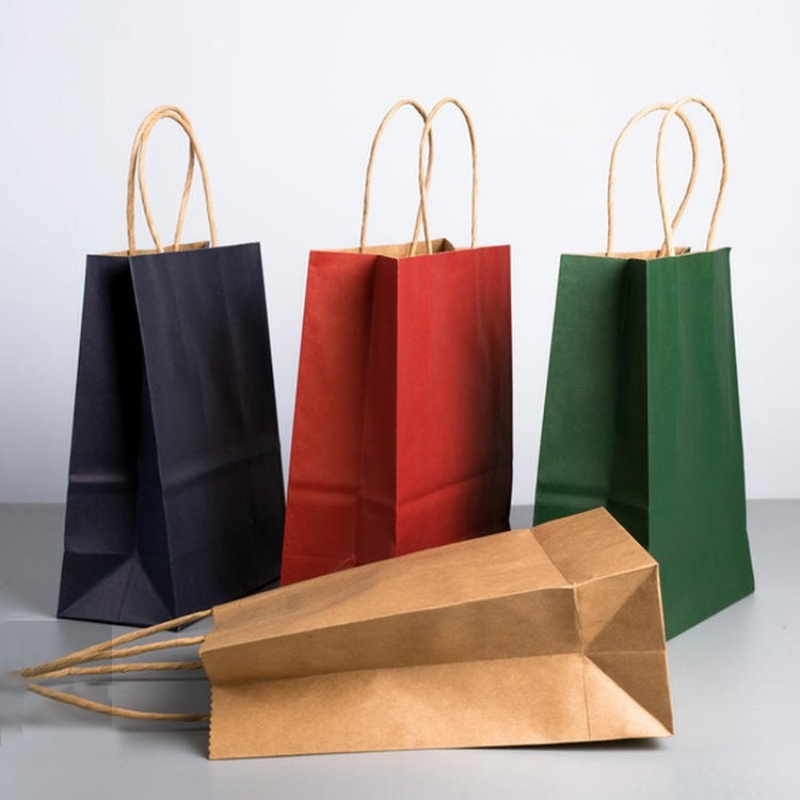
Retail and grocery bags — larger, higher load capacity, focus on handle strength and print area
Food service bags — smaller, grease-resistant, focus on food-contact safety and cost per unit
Most buyers need one, but plenty of businesses (convenience stores, bakeries, food halls) need both — and they behave very differently on quality.
Paper Grades: What "Kraft" Actually Means
The single biggest driver of price and performance is the paper itself, measured in GSM (grams per square meter — the weight and thickness of the paper).
Grade | GSM Range | Characteristics | Best For |
Light kraft | 60–80 GSM | Thin, low cost, limited load | Small food bags, single pastry |
Standard kraft | 90–120 GSM | Good balance of strength and cost | Takeout, pharmacy, small retail |
Heavy kraft | 130–180 GSM | Strong, holds shape, premium feel | Grocery, apparel, retail |
Premium / coated | 180+ GSM | Stiff, matte or gloss finish | Boutique retail, gifting |
Beyond weight, there are three fiber types:
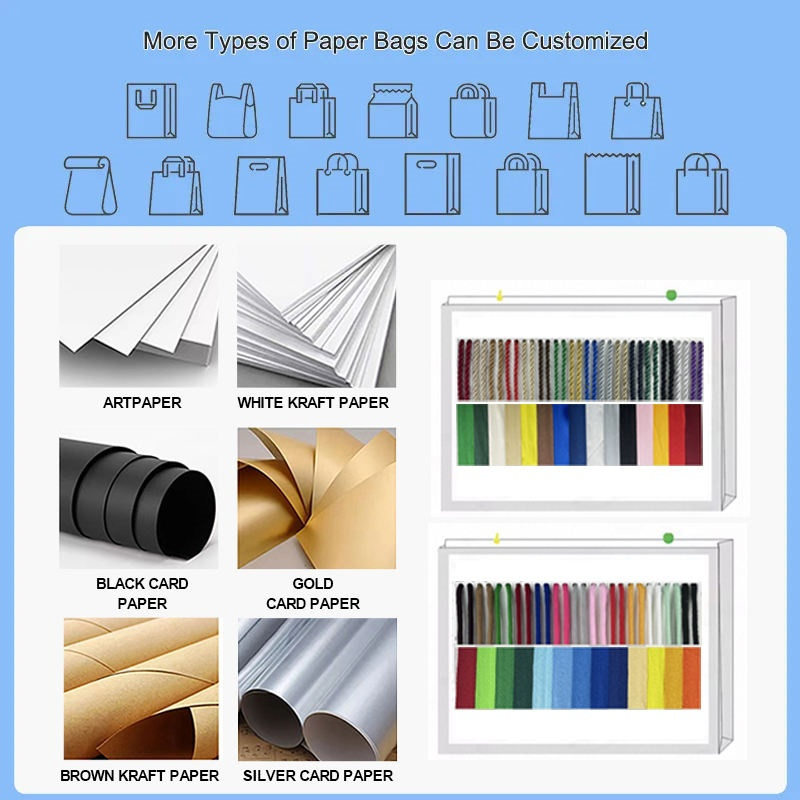
Brown kraft — unbleached, natural look, cheapest, the classic takeout bag
White kraft — bleached, cleaner print reproduction, preferred by brands with light-colored logos
Recycled kraft — made from post-consumer waste, often 100% recycled content, strongest sustainability story
Be careful with the word "kraft": it technically refers to the pulping process, and some suppliers sell thin, heavily-filled paper as "kraft." Always specify GSM in writing.
Handle Types and What They Signal
The handle is where cheap bags fail first. There are four common constructions:
1. Twisted Paper Handle
Rolled paper cord glued to the bag. Strong, comfortable, and the standard for retail and grocery bags. Load capacity typically 5–10 kg depending on GSM and glue quality.
2. Flat Paper Handle
A folded flat strip — cheaper than twisted, less comfortable under heavy loads, but prints cleanly and lies flat for shipping. Good for mid-weight retail.
3. Die-Cut Handle
A hole punched through the bag itself. Cheapest option, no added material, but lower load capacity and uncomfortable with heavy contents. Best for light retail and promotional bags.
4. SOS / Block Bottom (No Handle)
A self-opening square-bottom bag with no handle — the classic bakery and takeout bag. Fast to pack, stands upright on the counter, and the standard choice for food service.
Pro tip: If a customer will carry the bag more than two blocks, don't use die-cut handles. Handle failure is the number one complaint in paper bag reviews, and it's entirely preventable by spec.
Food-Safe Paper Bags: The Grease Problem
A standard kraft bag is not grease-resistant. Put a fried item or a buttered pastry in it and you get translucent oil spots within minutes — which looks unprofessional and can compromise the paper's strength.
For food service, you need one of these:
Greaseproof paper bags — mechanically treated pulp, oil-resistant without chemical coating; the standard for bakeries and fried food
PE-coated food bags — a thin polyethylene layer for full moisture and grease barrier; not recyclable in standard paper streams
PFAS-free coated bags — newer water-based barrier coatings that resist grease while remaining recyclable; increasingly the default in the EU
And always confirm food-contact compliance: FDA (US), LFGB (Germany/EU), or the equivalent for your market. A bag that isn't certified for direct food contact shouldn't be touching a sandwich, no matter how good it looks.
Load Capacity: How to Actually Specify It
Suppliers rarely publish honest load ratings, so test it yourself. The practical rules:
GSM is the base — under 90 GSM, expect failure above 3 kg
Bottom construction matters more than weight — a reinforced block bottom or glued card insert dramatically increases capacity
Glue quality is invisible — cheap bags use less adhesive; handles peel off in humid conditions
Humidity is the silent killer — paper loses up to 40% of its strength in high humidity; if you're shipping to tropical markets, spec one grade higher
A simple pre-order test: fill a sample bag to your intended load, hang it by the handle for 30 minutes, then carry it around for 10 minutes. If the handle shows any separation, reject the spec.
Custom Printed Paper Bags: The Real Economics
A printed paper bag is one of the cheapest brand impressions available — it's carried through streets, offices, and public transport for 20+ minutes.
What to know before ordering:
MOQ — flexographic printing typically starts at 10,000–30,000 units; digital printing can go as low as 500–1,000 for testing designs
Print coverage — full-bleed coverage costs significantly more than one- or two-color logos; a single-color logo on brown kraft is the highest-value option for most small brands
Print method — flexo (cheap at volume, 1–4 colors) vs. offset (photo quality, higher volume) vs. digital (low MOQ, per-unit cost stays high)
Food-safe inks — for food bags, require water-based or soy-based food-grade inks in writing
Lead time — 4–6 weeks production plus shipping; order ahead of seasonal peaks (Q4 fills factories by September)
A practical approach: print one hero size with your logo, keep two other sizes stock. You capture most of the branding value without paying custom prices across your entire bag range.
Eco-Friendly Paper Bags: What to Claim and What to Avoid
Paper bags are not automatically "green" — the story depends on fiber source, bag weight, and end-of-life.
Look for these certifications when evaluating suppliers:
FSC® or PEFC — fiber from responsibly managed forests; the most widely recognized and the easiest claim to substantiate
100% recycled content verification — third-party verified, not self-declared
EN 13432 / ASTM D6400 — only relevant for compostable coated bags; confirm the coating, not just the paper
PFAS-free declaration — increasingly mandatory in EU food packaging law
One honest note worth putting in your own marketing: a heavy bag used once is not necessarily better than a light bag used twice. Selling durable, well-made bags that customers reuse is often the strongest sustainability position — and it's defensible, unlike vague "eco-friendly" claims.
How to Vet a Paper Bag Supplier
Use this checklist before placing a bulk order, especially when importing:
Request GSM and fiber type in writing — verbal assurances are worthless
Ask for glue and handle pull-test data — or run your own with samples
Verify certification numbers — check FSC license codes on the FSC database, don't accept logo images
Confirm food-contact compliance documents — FDA or LFGB test reports per SKU
Check dimensional tolerance — inconsistent bag sizes jam automated packing lines
Understand what's included in the price — inspection, freight, and customs paperwork are frequently excluded from quoted FOB prices
Importing directly from manufacturers in China, Vietnam, or India typically cuts unit costs 30–50% at container volumes. For smaller operations, a regional distributor with a 5,000-unit MOQ is usually the smarter entry point — then move to direct import once annual volume justifies the logistics overhead.
Frequently Asked Questions
What GSM paper bag do I need for groceries?
Standard grocery bags run 130–180 GSM with twisted paper handles. Anything under 120 GSM will struggle with a full load of groceries, especially in humid weather.
Are paper bags stronger than plastic bags?
A quality 150 GSM kraft bag with twisted handles holds more weight than a typical single-use plastic grocery bag. Cheap thin paper bags (under 80 GSM) are weaker than plastic and tear at the handle.
Can paper bags be recycled?
Uncoated and water-based coated paper bags recycle in standard paper streams. PE-coated and greaseproof-treated bags are usually not accepted curbside. Remove handles if they're a different material before recycling where required.
Are paper bags food safe?
Only if they're certified for food contact. Standard kraft bags are made for general goods, not direct food contact — always specify food-grade bags with FDA or LFGB compliance for anything edible.
How much do disposable paper bags cost?
At wholesale volume, small takeout bags run 0.02–0.06 each, standard retail bags 0.08–0.20, and custom printed bags 0.15–0.45 depending on GSM, handle type, and print coverage. A retail store using 1,000 bags weekly spends roughly 500–1,500 per month.
Final Takeaway
Buying disposable paper bags comes down to five specs: the right GSM for your load, the right handle type for how far it travels, a food-safe grade if anything edible goes inside, verifiable certifications for your market, and a supplier whose samples survive your own pull test. Nail those five and the bag stops being a cost line — it becomes the cheapest advertising you own.
Looking for wholesale disposable paper bags with custom printing? [Contact our team / Browse our catalog] for samples and factory-direct pricing.