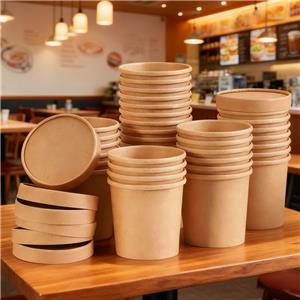
Most cup spec mistakes come from treating hot and cold as one category. This guide breaks down the structural differences, the lining choices, and where the cost actually sits.
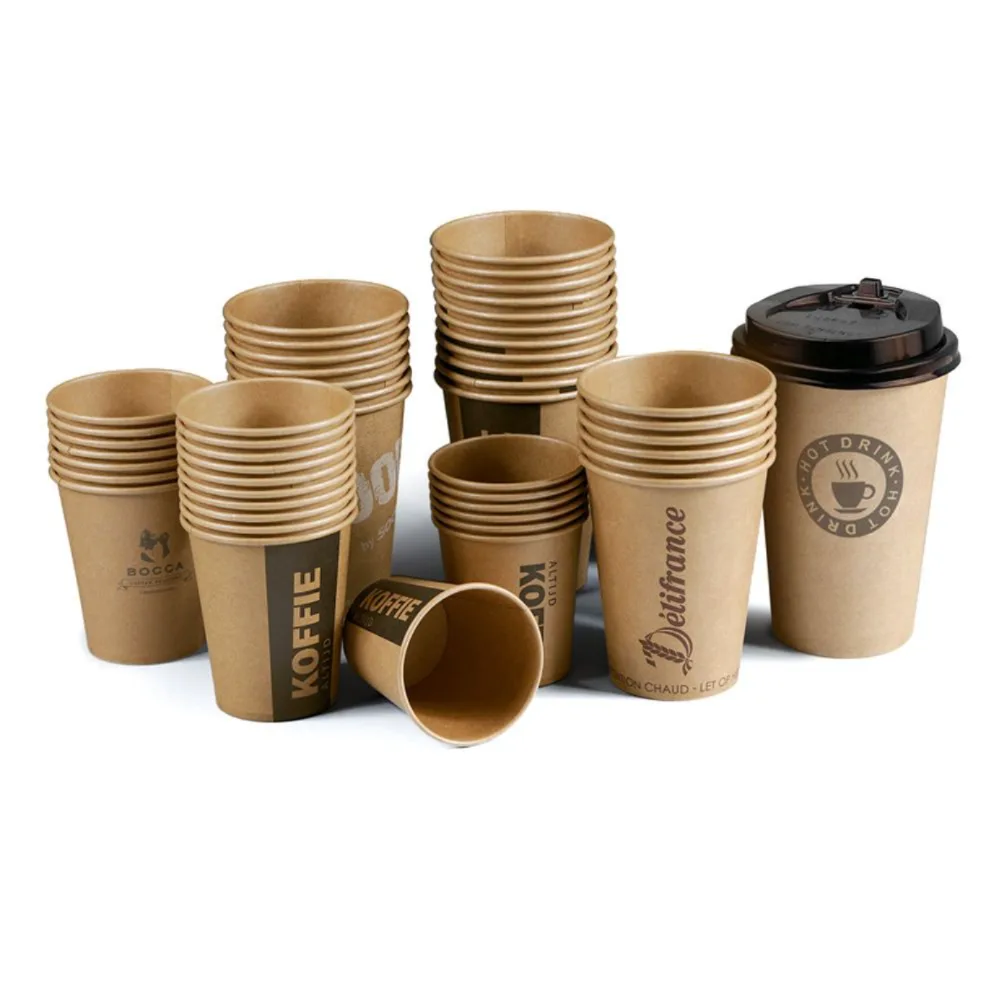
Specifying a paper cup looks simple until a shipment arrives and the cups go soft at 85°C, or the print blisters under condensation. Most of those failures trace back to one decision made early: treating hot and cold service as a single category.
Start with the wall structure, not the volume
Volume is the easiest thing to specify and the least important to get right first. The wall structure determines whether the cup performs.
Single wall
One layer of board with a liquid-barrier lining. Cheapest per unit, lightest to ship, and the default for cold drinks and short-hold hot service where a sleeve is acceptable. Single wall cups lose rigidity quickly above about 85°C, which is why cafés pair them with sleeves.
Double wall
An inner cup plus an outer wrap with a trapped air gap. The insulation removes the need for a sleeve, which usually offsets the higher unit cost once you account for the sleeve, the extra SKU and the counter labour. Print sits on the outer wrap, so artwork stays clean of condensation.
Ripple wall
A corrugated outer wrap — effectively a deeper air layer plus a tactile grip. Best insulation of the three and the most premium in hand. Justified for high-temperature service, gloved handling, or when the cup itself is part of the brand presentation.
Then match the lining to the liquid
The lining, not the board, decides what the cup can hold.
- PE (polyethylene) — the industry default. Reliable for water-based hot and cold drinks, low cost, widely recyclable in paper streams where facilities accept poly-coated board.
- PLA (polylactic acid) — plant-derived compostable lining. Increasingly required in the EU and in markets with single-use plastic rules. Note that PLA softens above roughly 60°C, so it suits cold drinks and warm (not boiling) service unless specified otherwise.
- Water-based / aqueous coating — repulpable and plastic-free, but with a narrower temperature and shelf-life window. Worth evaluating for cold drinks and dry-adjacent foods.
A common specification error is ordering a compostable cup for 95°C service without confirming the lining's temperature rating. If the programme requires both compostability and boiling-temperature service, raise it at quotation stage rather than at proof approval.
Lids are where leak complaints originate
Almost every "the cup leaked" issue we investigate turns out to be a lid fit problem rather than a cup problem. Diameters are nominal — a 90mm cup from one tool does not guarantee a 90mm lid from another. Order cups and lids as a matched pair from a single tool set, and test with the actual drink temperature and delivery motion before committing to volume.
Where the cost actually sits
Unit price is the least useful number in a cup comparison. The real comparison includes:
- Lids and sleeves as separate line items;
- Carton cube and container utilisation — a slightly thinner wall can materially change freight per cup on a 40HQ;
- Print setup and plate costs amortised over the order quantity;
- Defect and complaint handling on arrival.
A cup that costs a fraction more per unit but ships 15% more densely and eliminates the sleeve is frequently the cheaper programme.
A short specification checklist
- Service temperature and hold time (not just "hot").
- Wall structure and whether a sleeve is acceptable.
- Lining type, confirmed against temperature and local packaging rules.
- Matched lid, tested with the real liquid.
- Print method matched to artwork complexity.
- Carton and container plan for freight.
- Destination market compliance and documentation.
If you send us the first four items, we can quote the rest against a real tool and give you a proof before anything is committed to production.