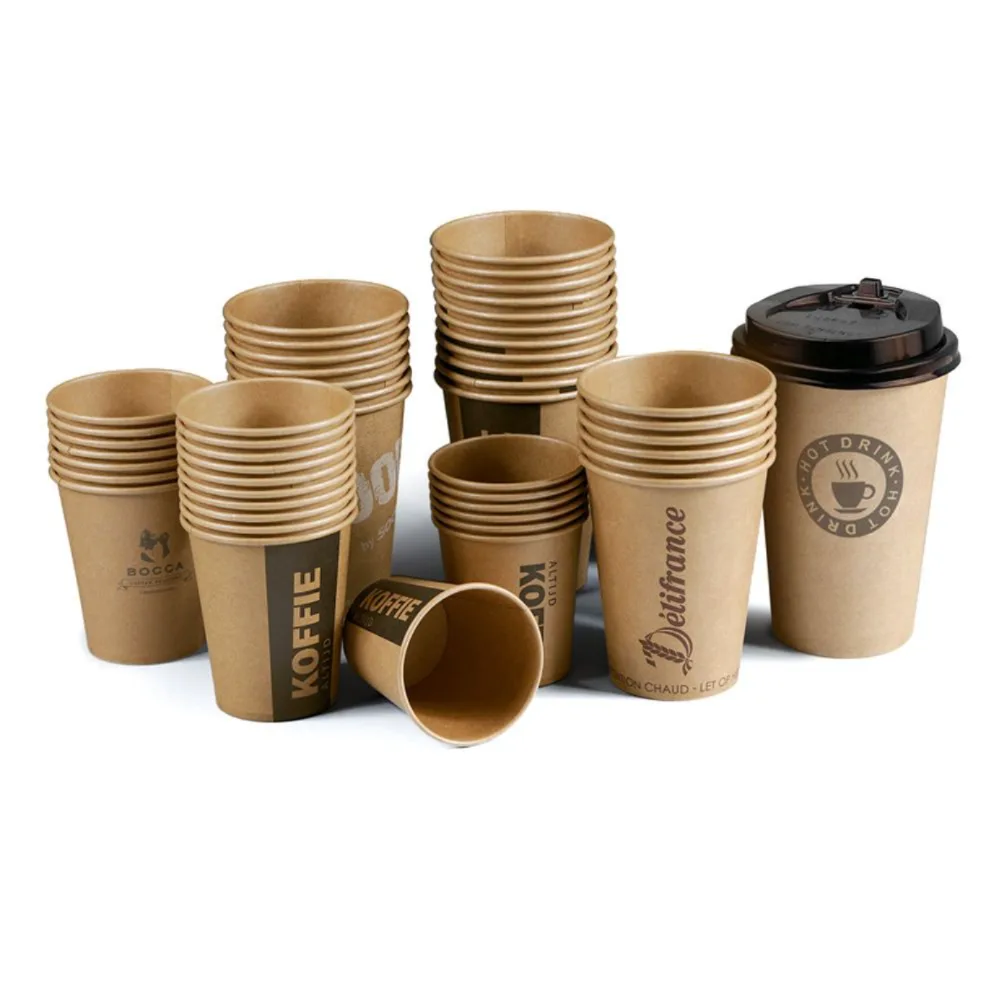
PLA is compostable, PE is cheaper and more heat-tolerant. The right choice depends on three variables most buyers never put in the brief: temperature, market regulation and disposal route.
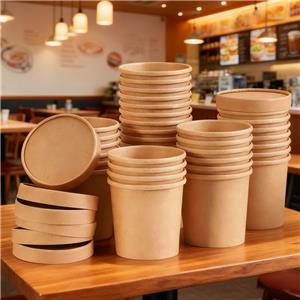
Almost every sustainability conversation about paper cups converges on the same question within two minutes: PLA or PE? The honest answer is that neither is universally better. They fail in different conditions, and the right choice depends on three variables that are usually missing from the brief.
What the two linings actually are
PE (polyethylene)
A petroleum-based polymer film extruded onto the board. It is the global default because it is cheap, forgiving in production, and stable across a wide temperature range. It performs reliably for both hot and cold service and has decades of food-contact history.
PLA (polylactic acid)
A polymer derived from plant starch — typically corn — with a compostability claim under industrial conditions. It looks and prints like PE-coated board, and on the shelf the two are nearly indistinguishable.
Three variables that decide it
1. Service temperature
This is the most common source of disappointment. PE holds comfortably through boiling-water service. PLA softens at elevated temperature, so a PLA-lined cup specified for 95°C coffee may deform at the seam within minutes. PLA suits cold drinks, iced coffee, desserts and warm — not boiling — service.
If your programme needs both compostability and boiling-temperature performance, that is a genuine engineering constraint. Raise it during quotation so the tool and lining grade can be specified together, rather than discovering it at proof approval.
2. The market's regulatory position
Single-use plastic rules are diverging by jurisdiction, and the definition of "plastic" matters more than the headline. Some frameworks treat conventional polymer coatings as plastic regardless of the paper substrate; others exempt them where the product is predominantly paper. Compostability requirements may also be tied to a certification scheme (for example EN 13432 in Europe) rather than to the material name.
Do not assume that "PLA" automatically satisfies a given market's rules. Confirm the specific certification your customer or customs authority will ask for, and request the documentation with the sample — not with the shipment.
3. The disposal route that actually exists
Compostability is a property, not an outcome. A PLA cup only composts if it reaches an industrial composting facility that accepts it. In markets without that infrastructure, a compostable cup is functionally single-use waste with a higher price and a stronger marketing claim — which is a reputational risk if a customer audits the claim.
Ask the practical question before the ideological one: where will this cup physically end up? If the answer is a landfill or an incinerator, the environmental benefit of PLA narrows considerably and recycled-content board or aqueous coatings may serve the brand story better.
Practical comparison
| Factor | PE | PLA |
|---|---|---|
| Heat tolerance | High, suitable for boiling liquids | Moderate; best for cold and warm |
| Compostability | Not compostable | Industrial composting, certification-dependent |
| Unit cost | Lower | Higher |
| Shelf life | Long, stable | Shorter; heat and humidity sensitive |
| Recycling in paper streams | Possible where poly-coated board is accepted | Generally not accepted in standard paper streams |
| Best fit | Hot beverages, cost-sensitive programmes | Cold drinks, regulated markets, sustainability-led brands |
A decision path that avoids rework
- Fix the maximum service temperature first. If it exceeds roughly 60°C, PE is the safer default unless a compliant high-heat alternative is specified.
- Confirm the exact regulatory requirement and its certification body for each destination market.
- Confirm the disposal infrastructure your customer can realistically access.
- Then compare cost — including shelf-life risk, since PLA stock degrades faster in hot, humid warehouses.
- Order sample cups and test them with the real beverage before committing to a print run.
The option most buyers overlook
A split programme is often the best answer: PLA or aqueous-coated cups for cold and sustainability-positioned lines, PE for the hot core range. It satisfies the sustainability narrative where customers actually look for it, without paying a premium — or taking a performance risk — on the 95°C coffee that dominates volume.
We produce both lining types in-house and can quote a mixed programme against one artwork set, so the two lines share a visual identity.